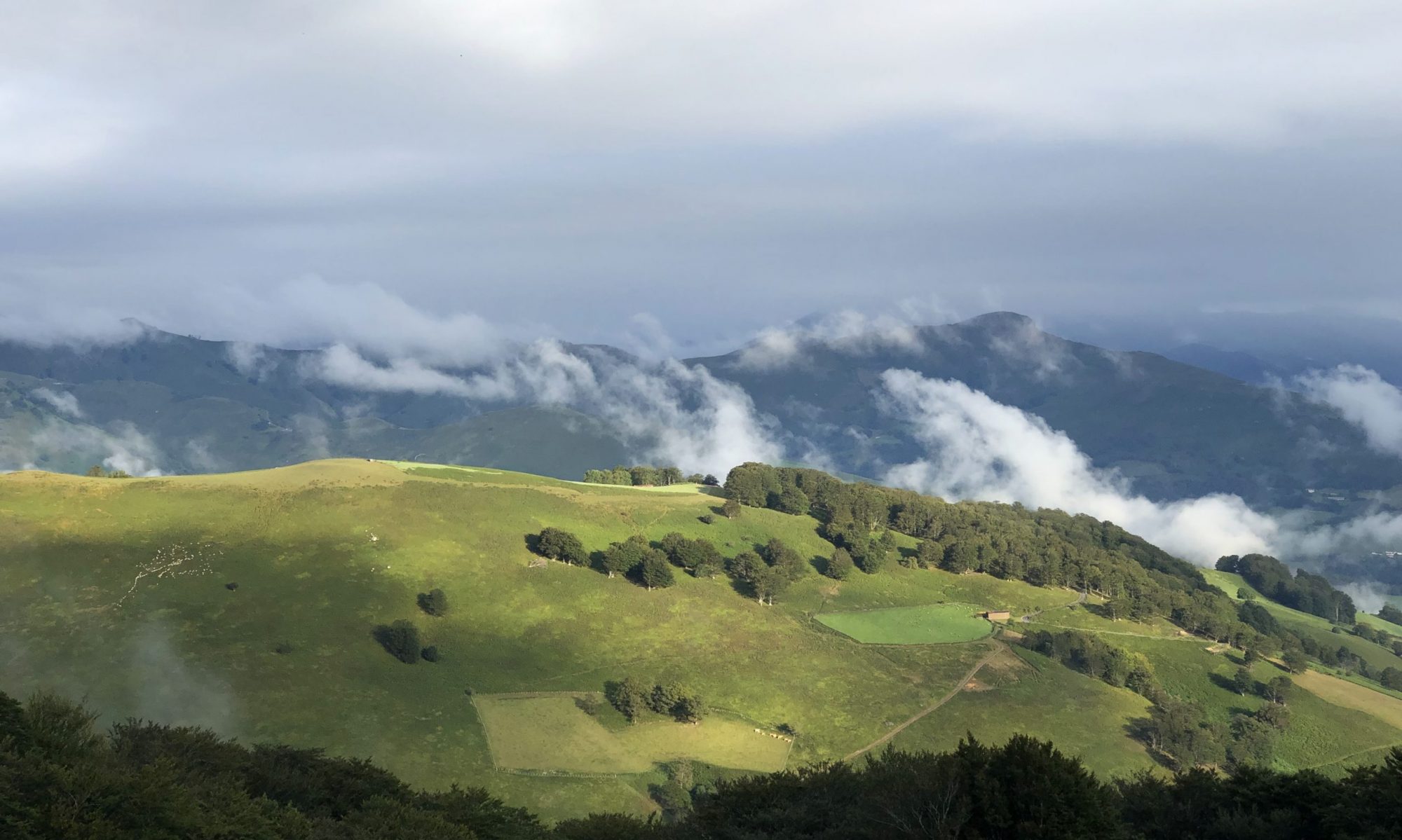
Decided to eat humble pie and use my sticks. I could tell a few differences: didn’t need to watch the ground so closely- improved posture, cadence was more uniform, could tell pressure was less on my hip joints. And my brain perked up. Oh! I remember this. We’re walking!
We now register via an internet form as a Spain requirement. We receive a QR code and will present the code at lodgings instead of presenting our passport.
IMPORTANT INFORMATION: Since December 2, 2024, Spanish law requires all users of accommodation (casa rural, Rbnb, etc. … and ALBERGUES) to register upon arrival. In order to facilitate this formality, a company has created the PilgrimPass.
Spring is here! Temps range from day to day – 75 to 30 to 60 to 40 and it looks like up to 80 in a week. The wind has been strong enough to blow entire buildings to the next state. But.. winter is over, and I look forward to getting my Camino legs back. Slowly. Steadily. I have six months to get ready. I’m ready!
I see that I’ve not posted since May. As of today, all is well with me! I am no longer in ongoing medical treatment – just the usual annual check-ups we all do + annual scans and bloodwork with the oncologist. Had a couple of surgeries in August and will be deemed fully recovered from those as of the first week of December.
On the Camino front, I’ve booked lodging for my fall, 2025 Camino.
Camino Inglés – A Coruña to Santiago (5 days) – this completes the Inglés I started on El Camino de San Antonio Missions with my friends in Texas.
After several frustrating days of dealing with Chase Sapphire travel & Air France, Air France has decided to void the voucher I was going to use for the May/June Germany trip. So, I won’t be on the Mosel Camino this spring.
It costs very little to get to Germany once I’m in Portugal/Spain, so I may still go after I finish the Camino Portuguese (from Porto) and the Camino Inglés (from A Coruña). The Portuguese is about two weeks walking and the Inglés is only 5 days. I feel my chapter of European walks is coming to a close, so I may take this opportunity. Even if I’m not up for walking the Mosel Camino – I would enjoy seeing that part of the world. Pondering.
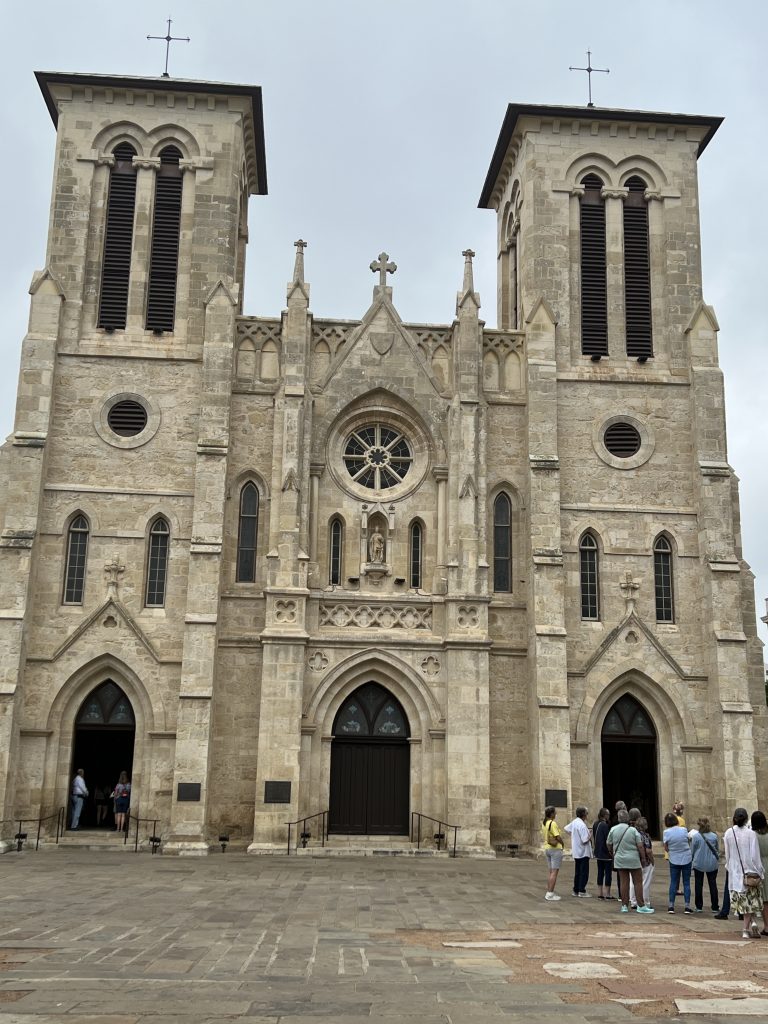
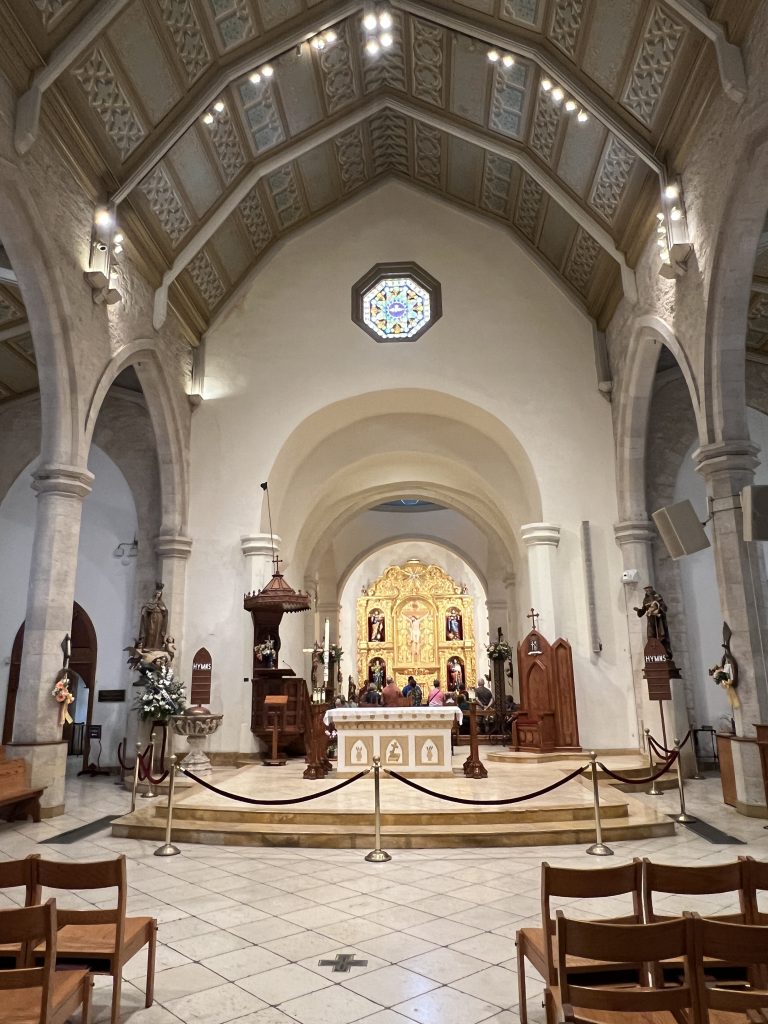
“San Fernando Cathedral was founded on March 9, 1731 by a group of 16 families who came from the Canary Islands at the invitation of King Phillip V of Spain and is the oldest, continuously functioning religious community in the State of Texas.” https://sfcathedral.org/our-history
A good night’s sleep and Marie and I were ready to explore a bit of downtown. The cathedral was less than two blocks from our hotel.
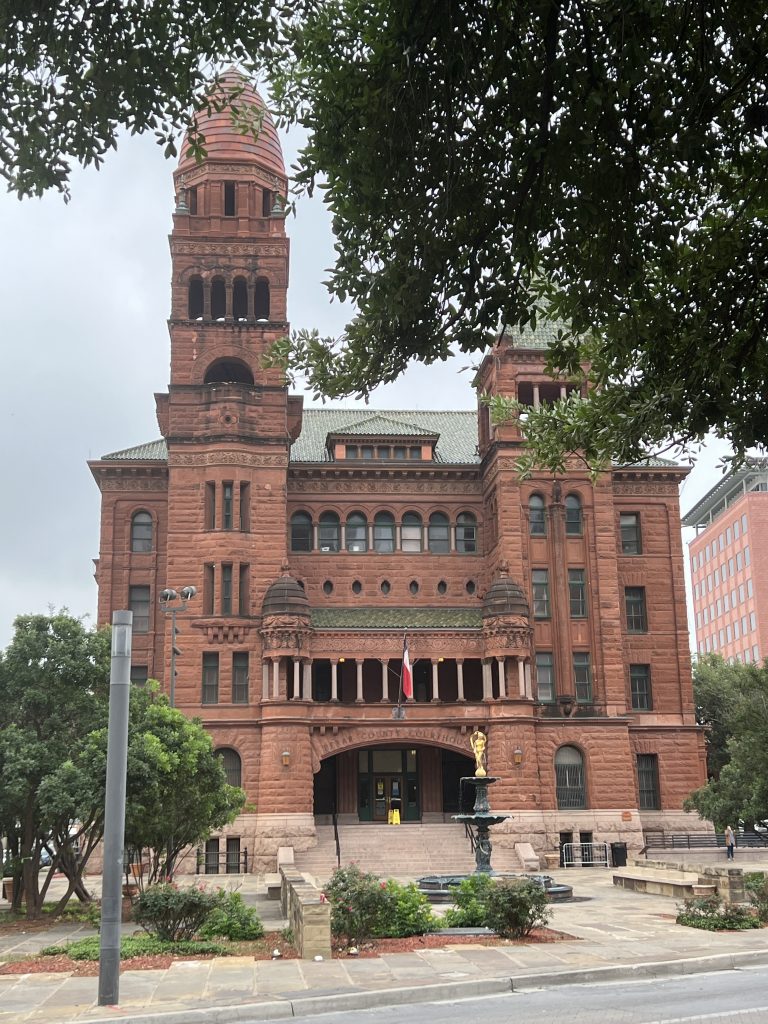
In the heart of downtown San Antonio.San Fernando CathedralSan Fernando CathedralBexar County Courthouse – across the street from the cathedral.
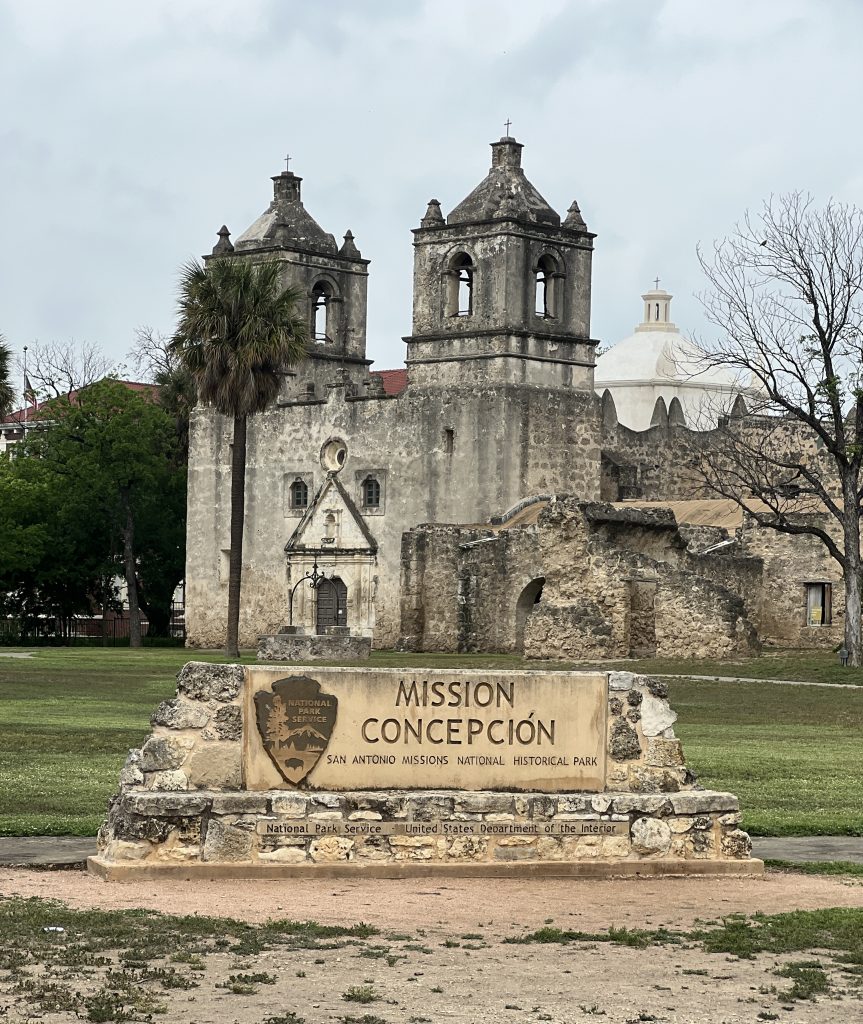
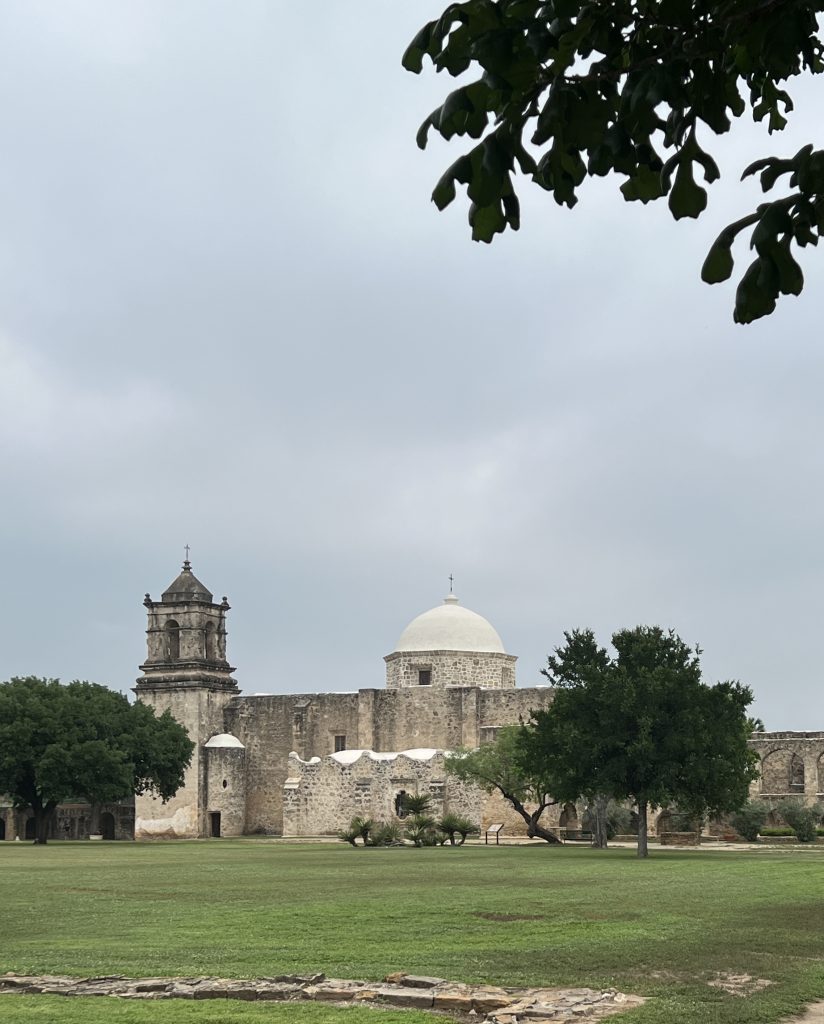
“Named in honor of Our Lady of the Immaculate Conception and Juan de Acuña, the beautiful stone church known as Mission Concepción was originally founded in 1716, and transferred to the San Antonio River area in 1731.
The church is considered by many historians as the oldest unrestored church in the United States. It is a National Historic Landmark, a designated UNESCO World Heritage Site, and is home to an active Catholic community in San Antonio.” https://www.missionconcepcion.org/our-church
I didn’t get photos inside because there was a guide and a bunch of tourists in the pews. And because I was so tired that I forgot!
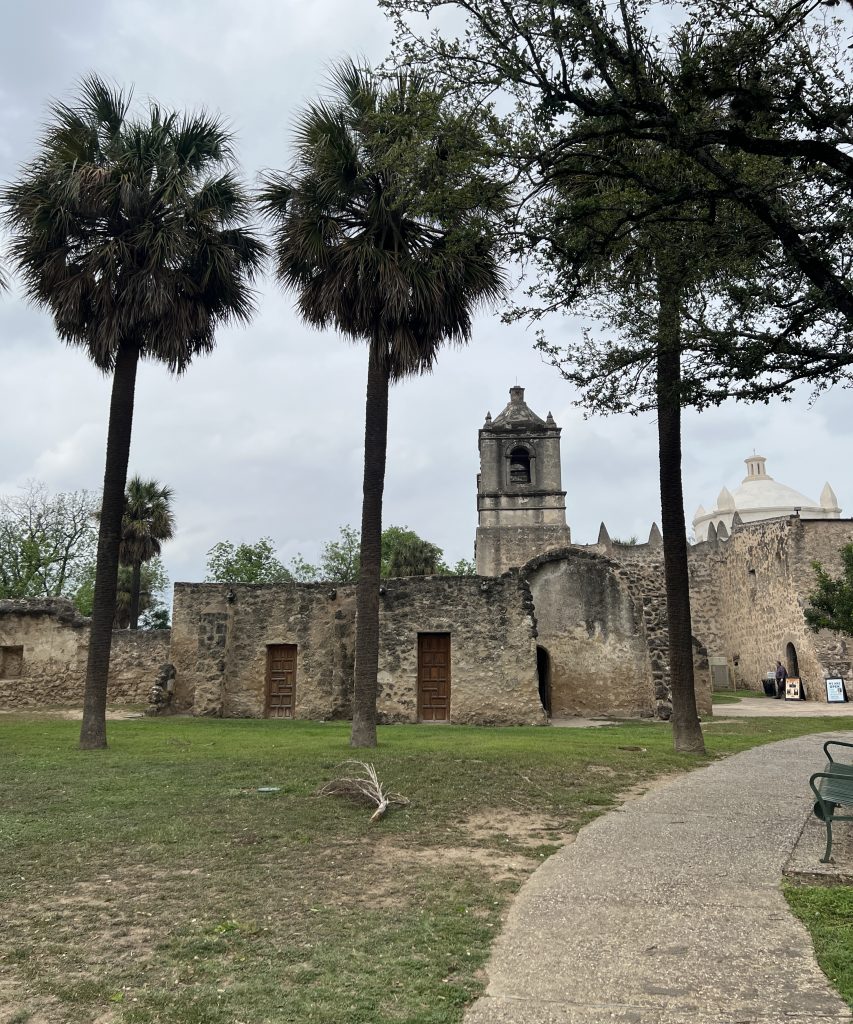
Walls and walls of unrestored mission sections.
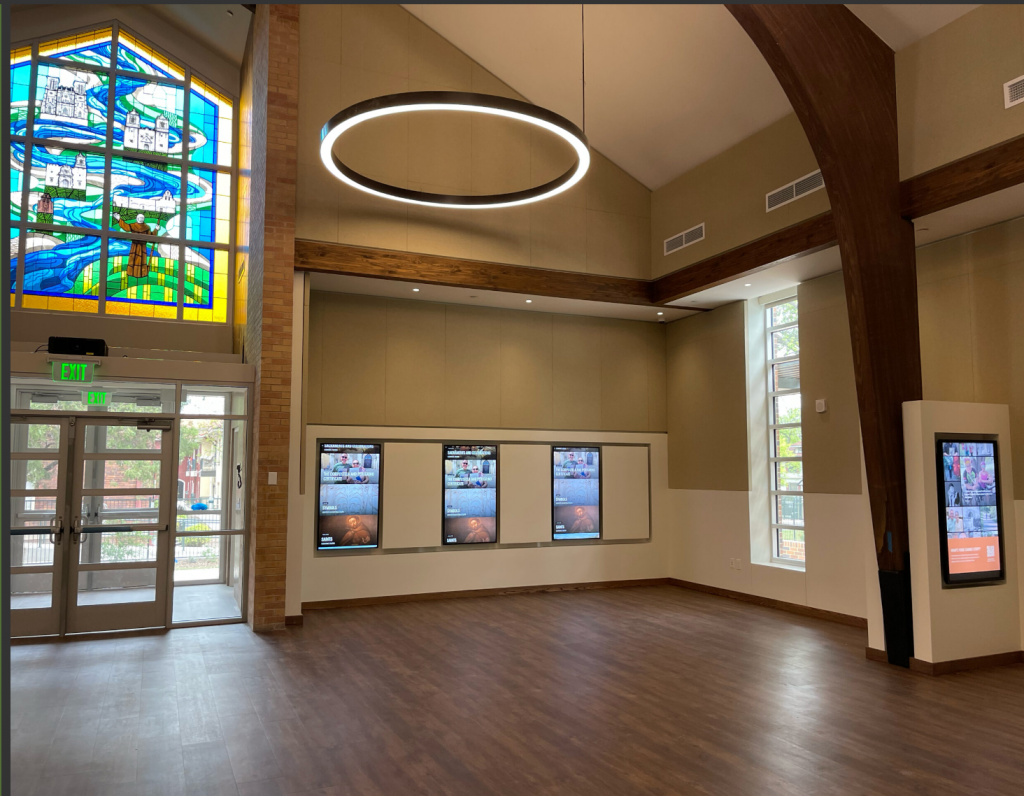
The Pilgrimage Center is attached to Mission Concepción by a patio. I was so excited to arrive – and so tired! That I forgot to take pictures. But here it is: https://caminosanantonio.org/pilgrimage-center/
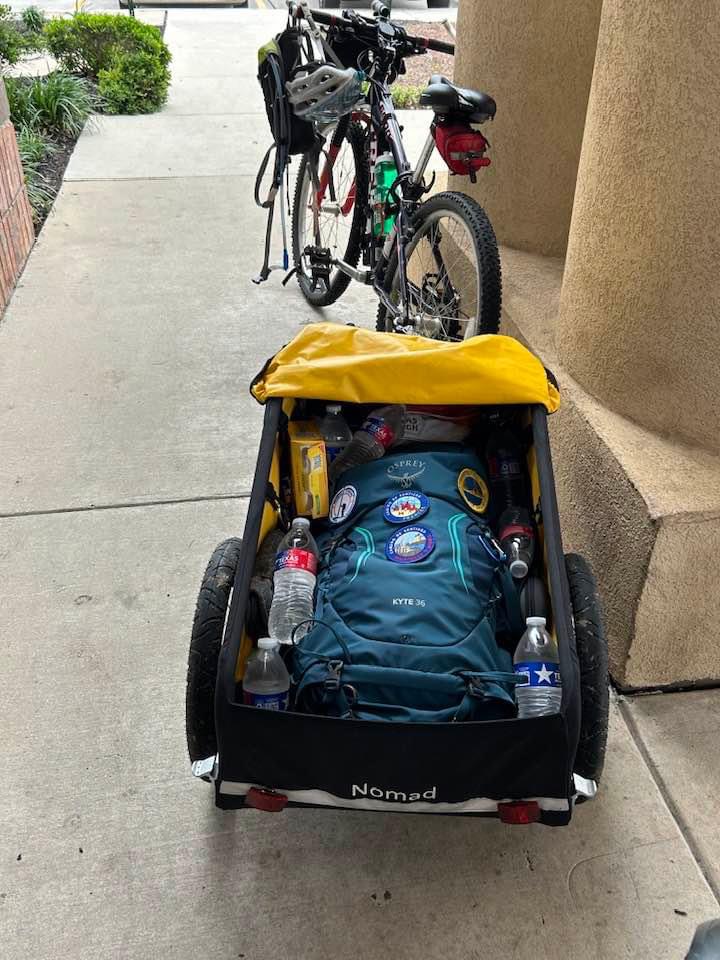
Mendy carried my pack in her Nomad trailer both days, but at this point, we had to transfer the pack to Marie’s e-tricycle and Mendy rode back to the hotel, packed up her car, and headed to a park campsite to finish a couple of days of camping and hiking.
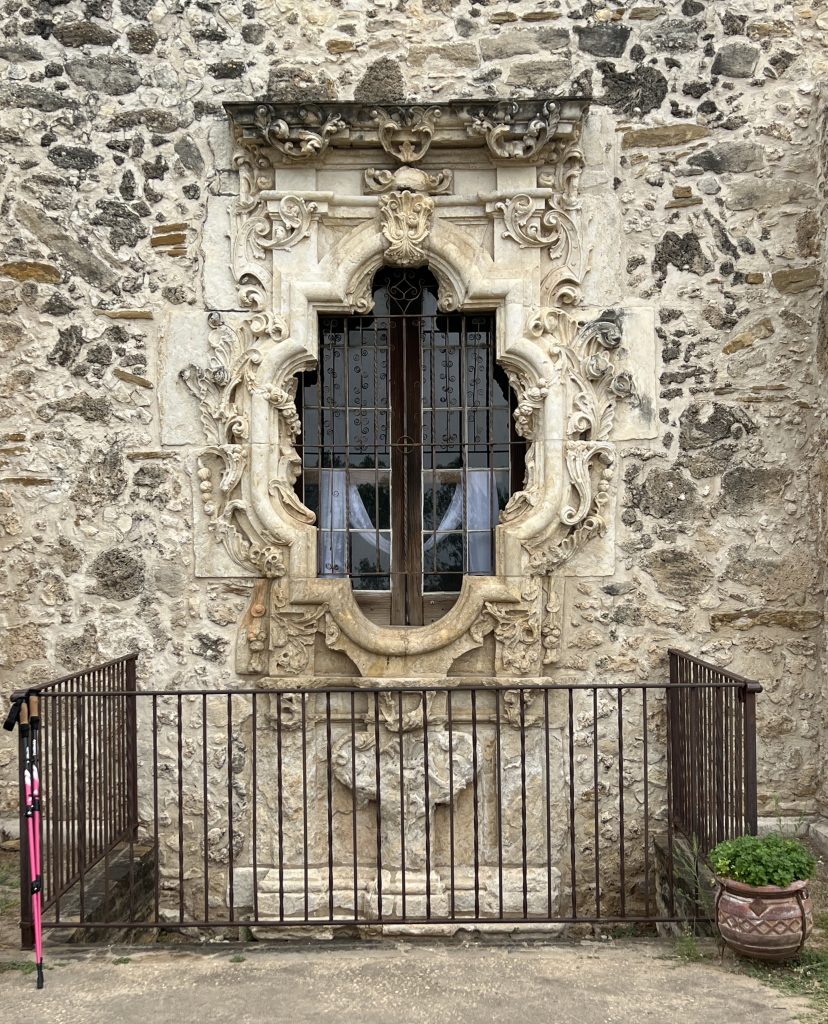
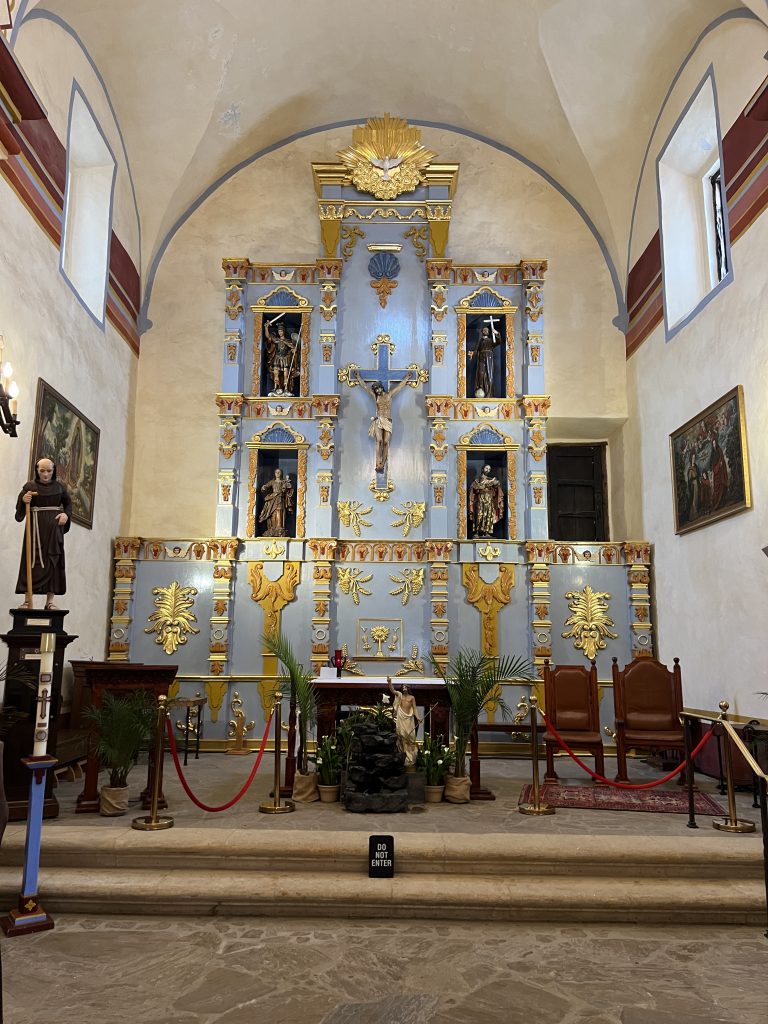
The Rose Window. Marie said she’d read that the priest would say mass from the inside standing at the window, and the natives had to stand outside to hear mass.
“
The Rose Window
“The Rose Window is known as the premier example of Spanish Colonial ornamentation in the United States. Its sculptor and significance continue to be a mystery. Folklore credits Pedro Huizar, a carpenter and surveyor from Spain, with carving the famous window as a monument to his sweetheart, Rosa. Tragically, on her way from Spain to join him, Rosa was lost at sea. Pedro then completed the window as a declaration of enduring love.